Ocean State Media reported that when Providence Mayor Brett Smiley vetoed the city's rent stabilization ordinance in April, he flagged a detail that got buried under the political noise: the ordinance was already "exempting about half of our rental units from the policy." He meant it as a criticism. For anyone shopping Providence's classic triple-decker stock, it reads more like a map.
The ordinance itself is a familiar Providence story by now. The City Council passed it 9-6 on April 16. Smiley vetoed it the next morning. The override vote needed ten of fifteen councilors and got nine, falling one vote short on May 15. On paper, that's the end of it. In practice, it's the reason the exemption clause buried inside that ordinance is worth understanding before you write an offer on anything with more than one unit.
What Actually Got Carved Out
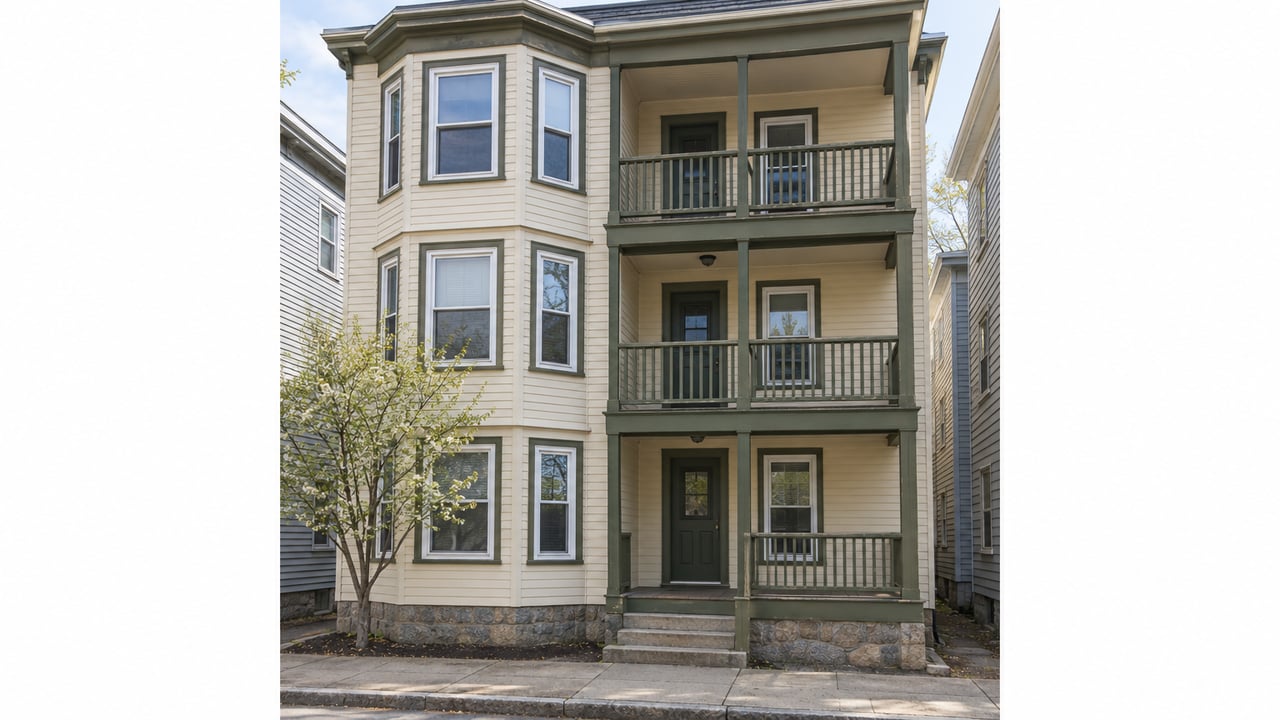
The ordinance, as written, would have capped annual rent increases at 4% for most Providence apartments. But it drew a specific line around small owner-occupied buildings, defined by the City Council as buildings of one to four units where the owner lives in one and rents out the rest. That's not a technicality. That's the legal description of a triple-decker with an owner in one flat.
The carve-out goes further than a single address. Under the council's published rules, someone who owns two separate properties, each under four units, living in one and renting the other, keeps both properties exempt, as long as the second property is owned by the same person rather than a corporation and that person doesn't own any additional rental property beyond the two. Corporate landlords and portfolio investors don't get this treatment. A single owner-occupant with a modest second property does.
That distinction matters because of who was left outside the exemption. Buildings owned by corporations or by owners with larger portfolios would have faced the full 4% cap, and the Providence City Council's proposed ordinance tied the stabilized rent to the apartment itself rather than the tenant, so a unit doesn't reset to market rate just because someone moves out. Owner-occupied small buildings would have skipped all of it.
The Supply Behind the Exemption Can't Grow
Providence's triple-deckers exist in this shape because of a decision made over a century ago and never reversed. The city prohibited construction of new triple-deckers in 1923, citing health and overcrowding concerns at the time. Nobody has built a new one in the city since. What's standing today is what got built before that ban took effect, largely in the early decades of the 1900s.
Walk the western edge of Smith Hill along Oakland Avenue and you'll see a stretch of triple-deckers built mostly in the 1920s that looks close to unchanged after a century. That's not preservation effort. That's simply what happens to a building type that stopped getting replicated. The stock that exists is the stock that will ever exist. It doesn't expand when demand rises. It only changes hands.
Pair that fixed supply with an exemption clause that specifically favors owner-occupants of exactly this building type, and the triple-decker stops being just an architectural artifact. It becomes a defined regulatory category with a ceiling on how much of it there is.
Why the Timing Just Changed
None of this was law as of the veto and override failure in May. It was a near-miss, and a lot of Providence real estate conversation this year treated it that way. That changed on September 9.
Democratic socialist State Representative David Morales beat incumbent Mayor Smiley in the Democratic primary that day, pulling in more than 14,000 votes to Smiley's roughly 12,600. Morales campaigned explicitly on rent stabilization and told reporters the day of his win that he'd work with the City Council to pass it, sign it, and set up enforcement within his first 100 days in office. He faces Republican Dave Talan in the general election on November 3. Providence's registered voters run 55% Democratic, and a Democratic socialist just unseated a sitting Democratic mayor in the primary. That's not a close call heading into November.
The two sides in this fight found agreement on at least one thing during the override fight itself: the city carried out its first enforcement action against rent-setting algorithms that same month, a sign that Providence's appetite for hands-on rental regulation didn't disappear with the veto override. If Morales takes office and follows through on his pledge, the exemption that sat quietly inside a failed ordinance in May becomes an operating fact of the Providence rental market sometime in early 2027.
That's the part worth sitting with if you're comparing a straight investment purchase against an owner-occupied 2-4 unit. One of those paths may soon carry a rent cap and per-unit rent tracking. The other, as currently drafted, would not.
What This Buys You, Neighborhood by Neighborhood
Providence's triple-decker neighborhoods don't share a price tag, and that's exactly where the exemption logic gets interesting.
Mount Pleasant, on the city's northwest side, carried a median sale price across all home types of $508,954 as of May 2026, up 5.9% year over year. The housing stock there mixes Cape Cods, Colonial Revivals, and bungalows in with the triple-deckers, so a buyer isn't limited to one building type on a given block.
Federal Hill, closer to downtown and built around Atwells Avenue's restaurant row, carried a median sale price of $684,770 over the same May 2026 window, up 16.7% year over year. The housing stock leans harder into multifamily triple-deckers alongside Victorian homes and red brick Italianate row houses, with condo conversions showing up more often in recent years.
That's a gap of roughly $176,000 between two neighborhoods that both built their identity around the same housing form. If the only lens you're using is median price, Federal Hill looks like the expensive twin and Mount Pleasant looks like the value play. But if you're buying a triple-decker to live in one unit and rent the other two, the regulatory category doesn't care which neighborhood you're in. An owner-occupied 1-4 unit building in Mount Pleasant and an owner-occupied 1-4 unit building in Federal Hill would sit on the same side of the exemption line. The price difference between them buys location, commute, and building condition. It doesn't buy a different rulebook.
That's worth separating out before you fall in love with a listing based on neighborhood name alone. The question that actually changes your long-term math isn't just where the building sits. It's whether you plan to live in it, because that's the detail the exemption is built around.
Questions Worth Asking Before You Write an Offer
Does the exemption apply if I buy a triple-decker but don't move in? Based on how the City Council described the carve-out, the exemption is tied to owner-occupancy, meaning you living in one of the units. A triple-decker purchased purely as a rental, with no owner living on site, would fall outside the small-building exemption and inside whatever cap eventually takes effect.
Is any of this law right now, as of this September? No. The ordinance failed its override vote in May and isn't in effect. What changed is the political odds of something like it returning, given the outcome of the September primary and the composition of the electorate heading into the November general election.
What if I already own a rental and want to add an owner-occupied purchase? The council's published exemption rules allow a second property to stay exempt only if it's owned by the same individual, not a corporation, and that person owns no rental property beyond those two. Anyone with a larger portfolio would fall outside that protection regardless of whether they occupy one of the units.
If you're weighing a triple-decker purchase in Providence right now, the neighborhood comparison matters less than the occupancy plan you bring to it. I'd rather walk through both with you before you're deep into an offer than after. Reach out to Herson Martinez and let's run the numbers on the specific building you're looking at.
This article is general information, not legal, tax or financial advice. Consult a qualified professional about your situation.