Choosing between Cranston and Providence can feel tricky because, on paper, they look surprisingly close. Home values are in the same range, commute times are nearly identical, and both can work well depending on how you want to live and what kind of property you want to buy. If you are trying to decide where your money, lifestyle, and long-term plans line up best, this breakdown will help you compare the numbers and the day-to-day feel. Let’s dive in.
Cranston vs. Providence at a Glance
If you zoom out, the biggest difference is not commute time or even headline pricing. It is housing type, density, and tax treatment.
Cranston leans more toward detached homes and owner-occupied living. Providence offers more multifamily options, a denser city setting, and lower owner-occupied property tax rates for eligible properties. That means the better fit often comes down to how you want to live and what kind of property strategy you have in mind.
Home Types Shape Your Options
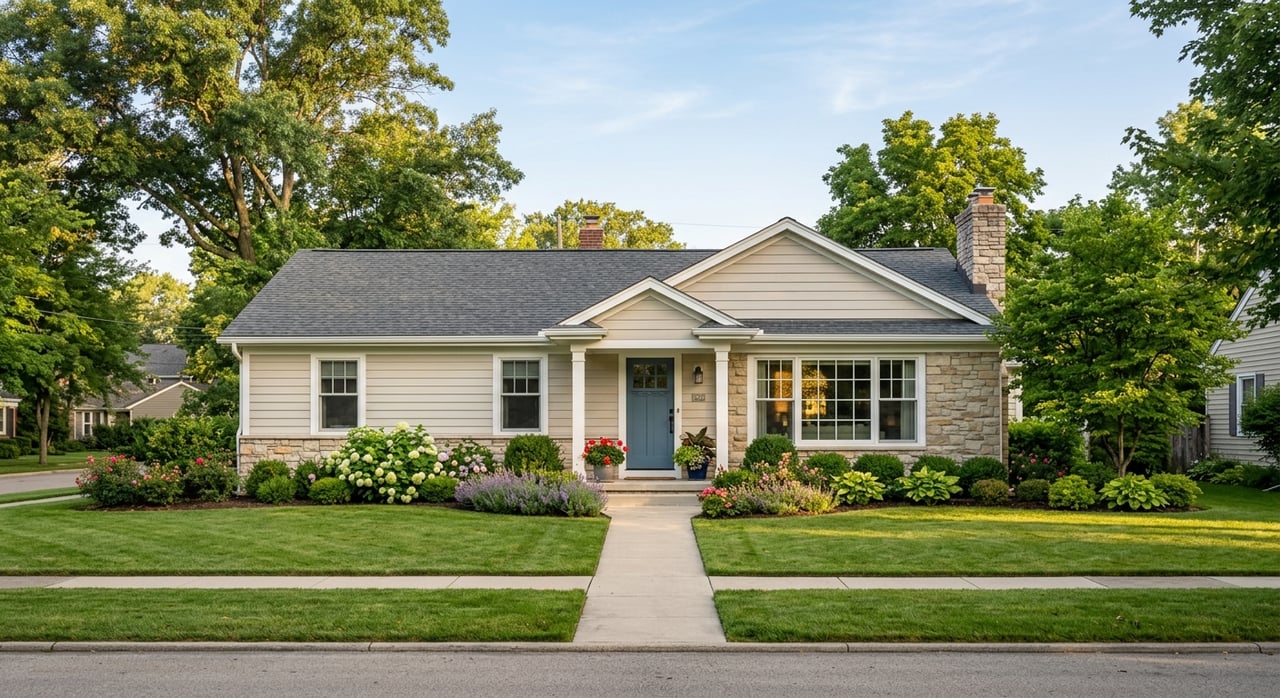
Cranston offers more detached homes
Cranston is much more owner-occupied overall. About 67.6% of housing is owner-occupied, and 62.7% of units are single-family detached.
In plain English, that usually means you are more likely to find traditional detached-home options in Cranston. If you picture a home with more separation from neighbors, more parking flexibility, or more yard space, Cranston may line up better with that goal.
Providence offers more multifamily choices
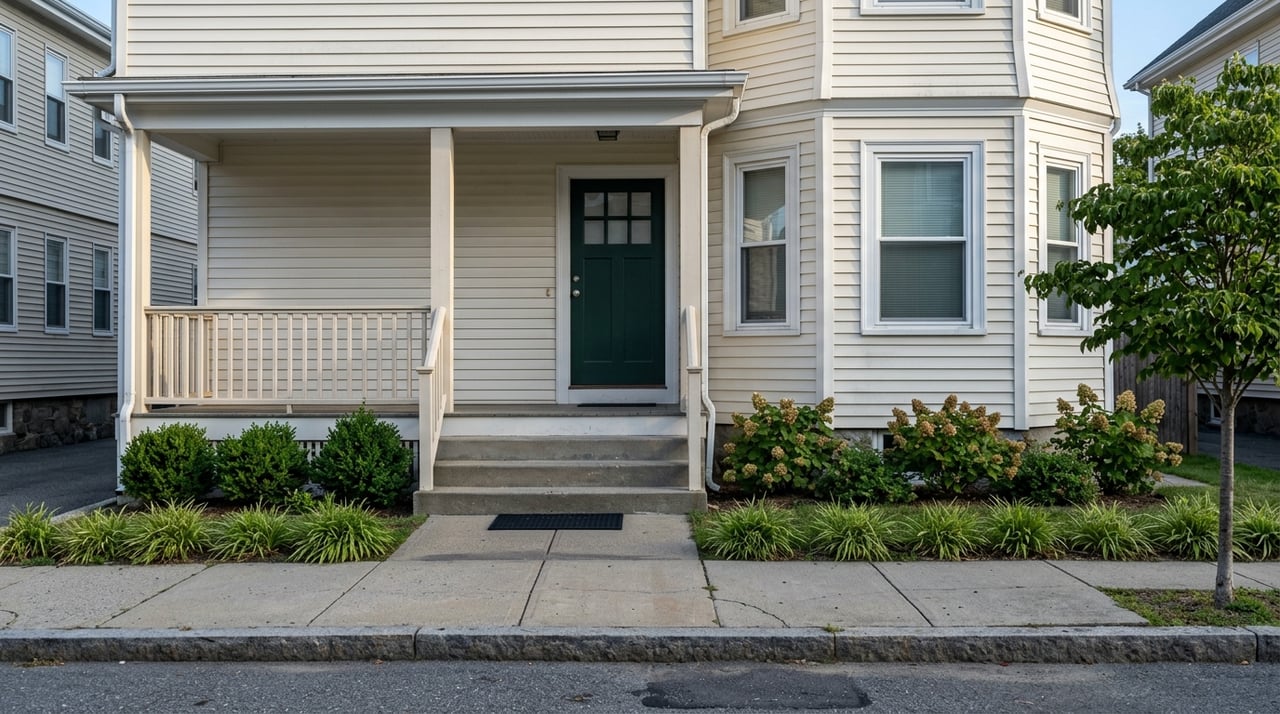
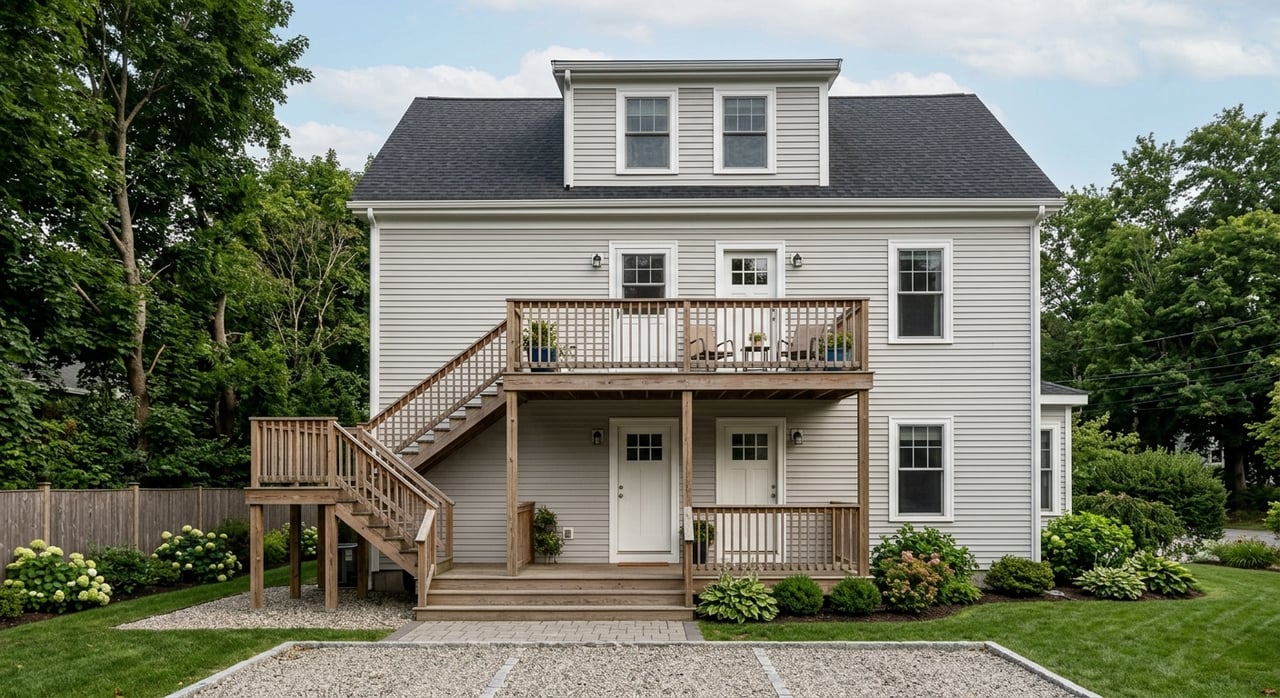
Providence has a very different housing mix. About 41.4% of housing is owner-occupied, while 50% of units are 2 to 4 units, only 24% are detached, and 13% are in buildings with 20 or more units.
For buyers, that means Providence often opens the door to condos, multi-family properties, and other attached or shared-wall housing types. If you are a first-time buyer, house hacker, or someone open to a 2 to 4 unit property, Providence may give you more choices that fit that plan.
Older housing matters in Providence
Providence also has an older housing stock. The city reports that more than 65% of rental units and 75% of ownership units were built before 1959, and more than 80% of all units were built before 1979.
That does not make Providence a bad option. It simply means inspections, repair planning, and renovation budgets may matter even more. If you are comparing similar price points in both cities, make sure you are also comparing likely maintenance needs.
Prices Are Closer Than You May Expect
A lot of buyers assume one city will be dramatically cheaper than the other. Right now, that is not really the case based on median owner-occupied value.
Cranston’s median owner-occupied home value is $378,300, while Providence sits at $362,200. That is a difference of just $16,100, which is meaningful but not huge when you look at the full picture of taxes, housing type, and upkeep.
Monthly owner costs are also close
Median selected monthly owner costs with a mortgage are $2,202 in Cranston and $2,100 in Providence. So if you only compare broad monthly cost averages, the two cities look pretty similar.
The more important question is what kind of property you are getting at that payment level. In Cranston, that budget may point you more toward a detached-home market. In Providence, it may bring more condo or multifamily possibilities into play.
Rent levels are close too
Median gross rent is $1,375 in Cranston and $1,408 in Providence. Again, the spread is fairly small.
That is why buyers should avoid making a decision based only on one headline number. The real difference is often in property form, owner-occupancy patterns, and whether a property supports your lifestyle or your investment goals.
Property Taxes Can Change the Math
This is where the comparison gets more interesting, especially if you are buying as an owner-occupant.
Cranston’s FY2025-2026 tax rate for 1 to 5 unit family dwellings is $13.88 per $1,000. Providence’s FY26 levy sets Class 1A residential property at $8.40 per $1,000 for eligible owner-occupied properties and $14.60 for non-owner-occupied. Class 1B is $7.55 owner-occupied and $14.00 non-owner-occupied.
Why owner-occupied status matters
Providence can offer a real tax advantage, but it is tied to eligibility and filing. It is not automatic.
That detail matters a lot if you are considering a 2 to 4 unit property and planning to live in one unit. For the right buyer, that owner-occupied tax treatment can improve monthly affordability in a meaningful way.
A simple $400,000 example
Here is how the annual property tax compares on a $400,000 home value:
| Location and tax class | Approx. annual tax | Approx. monthly tax |
|---|---|---|
| Cranston, 1 to 5 unit residential | $5,552 | $463 |
| Providence, Class 1A owner-occupied | $3,360 | $280 |
| Providence, Class 1B owner-occupied | $3,020 | $252 |
Compared with Cranston, that is roughly a $183 monthly savings in Providence Class 1A owner-occupied, or about $211 monthly savings in Providence Class 1B owner-occupied.
If you are a numbers-focused buyer, this is one of the biggest reasons Providence may deserve a closer look. But the filing and eligibility details matter, so you want to verify how a specific property would be classified before making a decision.
Commute Time Is Not the Main Deciding Factor
Some buyers assume Cranston automatically means an easier commute. The data does not really support a major gap there.
Mean travel time to work is 24.3 minutes in Cranston and 25.0 minutes in Providence. That is close enough that commute time alone usually should not drive the whole decision.
Lifestyle and access differ more than commute time
Providence is much denser, with 10,373.5 people per square mile compared with 2,925.9 in Cranston. Providence planning also emphasizes transportation planning and transit initiatives, while Cranston’s planning highlights highway-oriented business corridors along I-295 and Routes 2, 10, and 37.
In practical terms, Providence may be a better fit if you want a more urban setup and central access. Cranston may be a better fit if you value easier highway access, more parking flexibility, and a more suburban feel.
Long-Term Fit Depends on Your Goals
The right choice is not just about what looks good today. It is also about what supports your plans over the next several years.
Providence has seen a resurgence tied to centrally located market-rate and affordable housing, along with student housing. The city also notes that recent upzoning and ADU expansion are expected to support more multifamily development.
Cranston, by contrast, remains much more detached-home oriented. That can appeal to buyers who want space, owner-occupant stability, and a housing stock that feels more traditionally suburban.
Providence may fit buyers who want flexibility
If you like the idea of central access, multifamily options, or an owner-occupied property where rental income may help offset costs, Providence may offer more flexibility. That is especially relevant for first-time buyers and house hackers looking at 2 to 4 unit opportunities.
Providence may also make sense if you are comfortable with older housing and understand that older properties can require more careful inspection and repair planning.
Cranston may fit buyers who want simplicity
If your goal is a detached home, more space, and a straightforward owner-occupied setup, Cranston may feel more natural. It can be a strong option for buyers who want a classic single-family path without sorting through as many multifamily-heavy choices.
You may also prefer Cranston if your day-to-day routine depends more on driving corridors and you want a lower-density environment.
How to Decide Between Cranston and Providence
If you are stuck between the two, start with these questions:
- Do you want a detached home, condo, or 2 to 4 unit property?
- Are you buying purely for your own use, or do you want future rental flexibility?
- How important are yard space, parking, and lower density?
- Are you comfortable taking on an older property with possible maintenance needs?
- If buying in Providence, would you qualify for and file for owner-occupied tax treatment?
- Which matters more to you: suburban feel or more urban access?
When I help buyers compare nearby Rhode Island markets, we usually walk through both the lifestyle side and the monthly payment side. A home that looks similar on price can feel very different once you account for taxes, property type, upkeep, and future options.
The Bottom Line
Cranston and Providence are closer in value and commute time than many buyers expect. The biggest differences show up in housing stock, density, and owner-occupied tax treatment.
If you want more detached-home options and a suburban feel, Cranston will often make more sense. If you want more multifamily inventory, more central access, and potentially lower owner-occupied taxes if you qualify, Providence may be the stronger fit.
If you want help comparing the real monthly numbers for your budget, property type, and goals, Herson Martinez can help you break it down clearly and make a confident move.
FAQs
Is Cranston or Providence cheaper for buying a home?
- Based on median owner-occupied value, Providence is slightly lower at $362,200 versus $378,300 in Cranston, but the gap is relatively small.
Is Cranston or Providence better for buying a multifamily property?
- Providence generally offers more multifamily options because 50% of its housing units are 2 to 4 units, compared with Cranston’s more detached-home-oriented housing mix.
Are property taxes lower in Providence or Cranston?
- Providence can have lower property taxes for eligible owner-occupied properties, but the benefit depends on the property’s tax class and whether the owner-occupied filing requirements are met.
Is the commute better from Cranston or Providence?
- Mean travel times are very similar, with Cranston at 24.3 minutes and Providence at 25.0 minutes, so commute time is usually not the main difference.
Is older housing a bigger factor in Providence than Cranston?
- Yes. Providence reports that a large share of its housing stock was built before 1959, so inspections, repair budgets, and system age are important parts of the buying decision.